
Water damage can happen quickly – from a burst pipe or overflowing appliance to a roof leak or heavy Georgia storm. When it happens, knowing what to do first can help protect your family, belongings, and home from additional damage.
Here are the most important steps Fayetteville homeowners should take after discovering water damage.
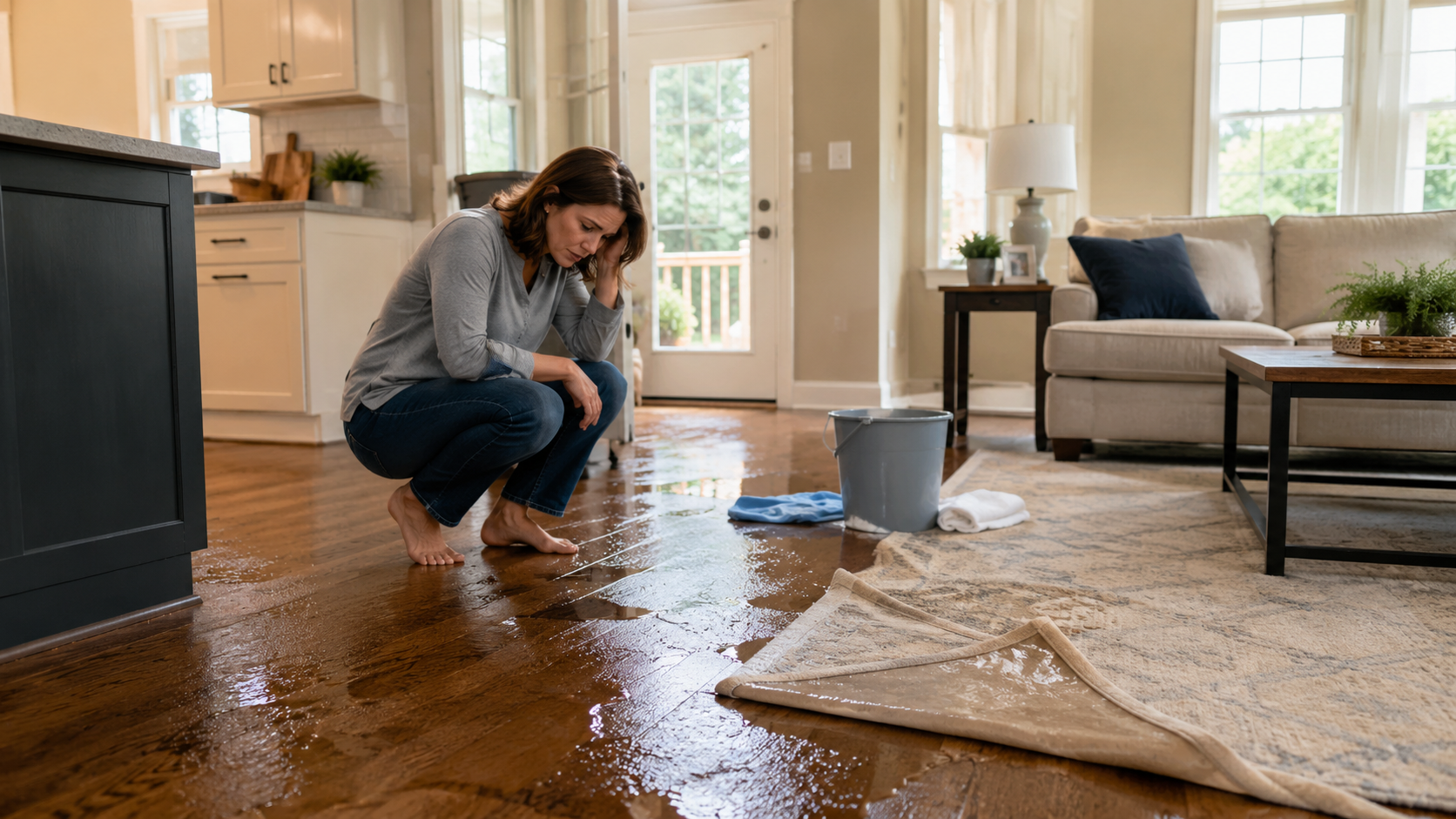
Stop the Water Source When Possible
If the water is coming from a broken pipe, appliance, or plumbing fixture, turn off the water supply as soon as it is safe to do so.
For a small leak, you may be able to use the shutoff valve near the fixture. For a larger problem, you may need to shut off the home’s main water supply.
Do not enter an area if the water may be contaminated or if doing so could put you at risk.
Watch for Electrical Hazards
Water and electricity are a dangerous combination.
Stay away from wet outlets, appliances, cords, and electrical panels. Do not unplug equipment or walk through standing water when electricity may still be active.
When there is any uncertainty, leave the affected area and contact a qualified professional.
Move Valuables Out of the Area
Once the space is safe, move furniture, electronics, rugs, documents, and other belongings away from the water.
Place furniture on blocks or move it to a dry room when possible. Avoid dragging wet items through unaffected areas, as this can spread moisture and contamination.
Taking photos before moving anything can also be helpful when documenting the damage.
Do Not Assume the Area Is Dry
Water often travels farther than it appears. Moisture can collect underneath carpet, behind baseboards, inside walls, beneath flooring, and around insulation.
Even when the surface feels dry, hidden moisture may remain. Without proper drying, it can lead to:
- Musty odors
- Warped flooring
- Damaged drywall
- Staining
- Mold growth
- Structural deterioration
Professional moisture-detection equipment can help identify areas that are easy to miss.
Be Careful With Soaked Carpet and Drywall
It may be tempting to pull up wet carpet or cut into damaged walls immediately, but removing materials without the right equipment can create additional problems.
Wet carpet padding may hold a large amount of moisture, and drywall can become weak or contaminated depending on the source of the water. Some materials may be saved, while others may need to be removed.
A professional evaluation can help determine the safest and most effective next step.
Begin Drying the Area Quickly
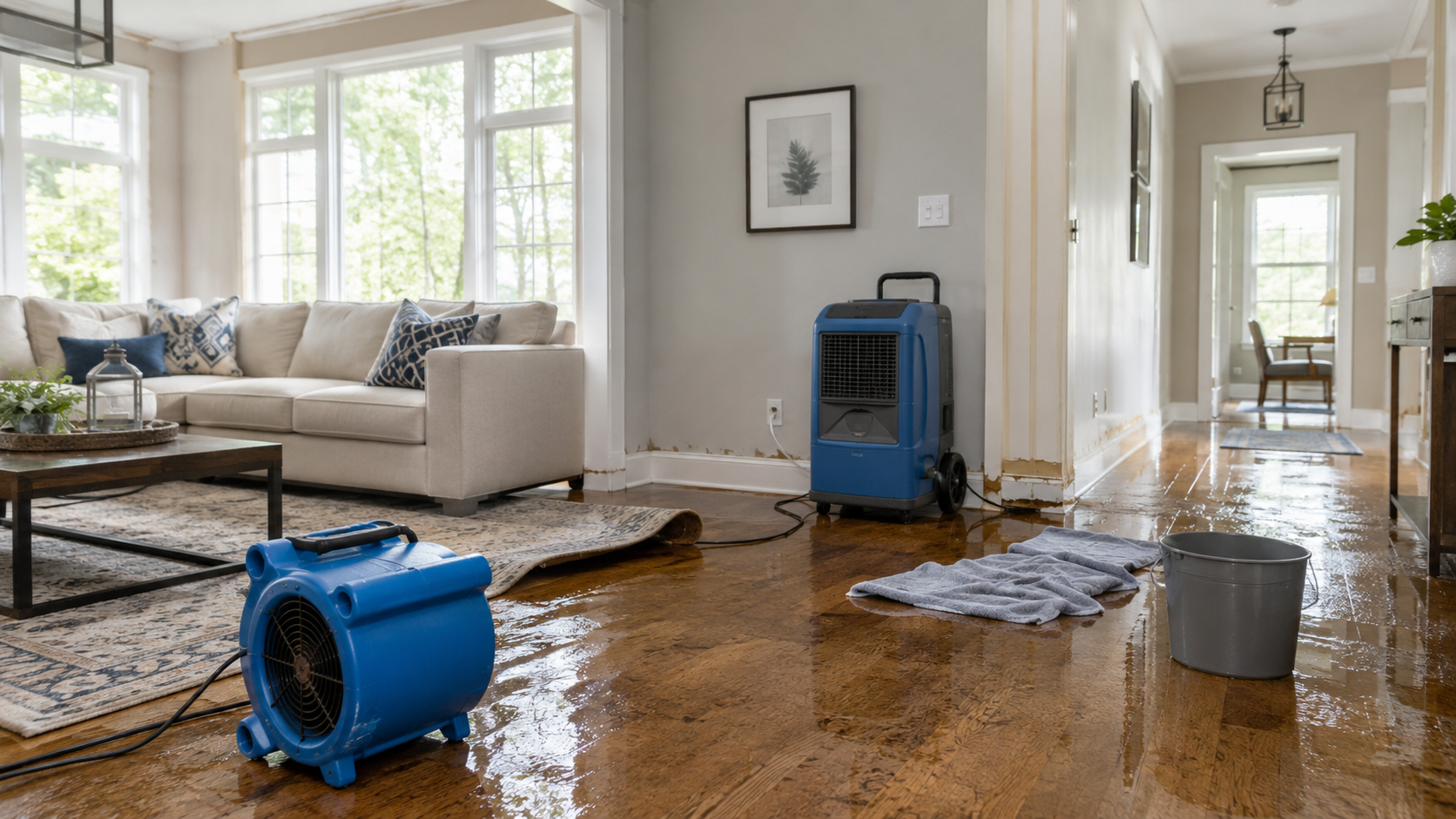
Opening doors and using fans may help with a small, clean-water spill, but significant water damage typically requires professional extraction, air movers, dehumidifiers, and ongoing moisture monitoring.
The faster the drying process begins, the better the chance of limiting damage and reducing the risk of mold.
When to Contact a Water-Damage Restoration Company
Professional help is especially important when:
- Water covers a large area
- Carpet, flooring, or drywall is soaked
- Water has entered walls or ceilings
- The source involves sewage or contaminated water
- The damage followed a storm or roof leak
- There are electrical concerns
- A musty smell or visible mold develops
Golden Glove Cleaning & Restoration helps homeowners in Fayetteville and surrounding communities respond to water damage with professional extraction, drying, and restoration services.
Acting quickly can make a major difference in protecting your property and getting your home back to normal.
Dealing with water damage in your Fayetteville home? Contact Golden Glove Cleaning & Restoration for help assessing and restoring the affected area.
0 Comments